
From Tummy Aches to Thriving: A Parent's Complete Guide to Children's Digestive Health
Dr. Chomba Chuma
MD & Founder, Velobiotics
Tummy troubles, fussy eating, and recurring illnesses — these are battles that thousands of South African parents face every single day. In this expert guide, Dr. Chomba Chuma breaks down the science of kids' gut health and shares practical, proven strategies to help your child go from constantly struggling to truly thriving. Discover how the right nutrition, lifestyle habits, and a quality chewable probiotic can transform your child's wellbeing from the inside out.
From Tummy Aches to Thriving: A Parent's Complete Guide to Children's Digestive Health
By Dr. Chomba Chuma, MD — Founder of Velobiotics
It starts with a familiar scene: your child pushes their dinner plate away, clutches their tummy, and says those words you've heard a hundred times — "My tummy is sore." You check for a temperature. You offer water. You wonder, again, whether this is something serious or just another passing moment of discomfort. If this sounds like a Tuesday in your household, you are far from alone.
Digestive complaints are among the most common health concerns reported in children worldwide, and South African parents are no exception. From bloating and constipation to recurring colds that seem to follow every tummy upset, the patterns can feel relentless and exhausting. But here's what I want you to know as both a doctor and a parent: most of these struggles trace back to one foundational system in your child's body — the gut.
When we understand what's happening inside that small digestive tract, we can stop putting out fires and start building genuine, lasting health. This guide is my attempt to hand you that understanding — in plain language, backed by science, and built around what actually works for real families.
Section 1: The Gut Is More Than a Digestive Pipe — The Science Every Parent Should Know
Your Child's Gut: A Living Ecosystem
Deep inside your child's intestines lives a complex, dynamic world of trillions of microorganisms — bacteria, fungi, and viruses — collectively known as the gut microbiome. Far from being something to fear, this microbial community is one of the most important drivers of your child's overall health.
According to research highlighted by Harvard Health on gut microbiome, the gut and brain are in constant two-way communication through what scientists call the gut-brain axis. This means that what happens in your child's gut doesn't stay in the gut — it influences their mood, concentration, stress response, and even behaviour.
But the gut's role doesn't stop there. Approximately 70–80% of the body's immune cells reside in the gastrointestinal tract. The gut lining acts as a critical barrier, deciding what gets absorbed into the bloodstream and what gets kept out. When this barrier is healthy and the microbial community is diverse and balanced, children tend to be more resilient — to infections, to inflammation, and even to allergies.
How the Microbiome Develops in Children
A child's microbiome begins forming at birth and continues developing rapidly through the first three years of life. Key factors that shape this early microbial blueprint include:
- Mode of delivery — babies born vaginally are colonised by beneficial bacteria from the birth canal
- Breastfeeding — breast milk contains prebiotics (HMOs) that feed beneficial bacteria
- Antibiotic exposure — necessary at times, but antibiotics can significantly disrupt microbial diversity
- Diet — fibre, fermented foods, and variety all support a thriving microbiome
- Environment and play — exposure to outdoor environments and animals introduces microbial diversity
This developmental window is critically important. Research supported by the National Institutes of Health on probiotics suggests that early disruptions to the microbiome are associated with increased risk of conditions ranging from eczema and asthma to obesity and behavioural difficulties later in life.
"The gut is not just where food goes to be digested. It is where your child's immunity is trained, where their mood is shaped, and where the foundation of lifelong health is either built or broken. Investing in kids' gut health early is one of the most powerful things a parent can do." — Dr. Chomba Chuma
Section 2: The Real Reasons Your Child Keeps Getting Sick
Modern Life Is Hard on Little Guts
We live in a time of extraordinary convenience — and extraordinary gut disruption. The very features of modern childhood that seem helpful (antibiotic treatments for every ear infection, ultra-processed snack foods, hand sanitiser on every surface) are often the same factors quietly undermining our children's microbial diversity.
Here are the most common gut health disruptors I see in my practice:
- Repeated antibiotic use — each course can wipe out large populations of beneficial bacteria, sometimes for months
- High-sugar, low-fibre diets — sugar feeds harmful bacteria and yeast; fibre feeds the good guys
- Ultra-processed foods — many contain emulsifiers and additives that damage the gut lining
- Chronic stress and anxiety — the gut-brain axis works both ways; a stressed child has a stressed gut
- Over-sanitisation — reducing exposure to environmental microbes limits microbial education
- Sedentary lifestyles — physical activity actually supports microbial diversity
What Parents Often Miss
Many parents treat symptoms — giving antacids for reflux, laxatives for constipation, antihistamines for skin reactions — without addressing the underlying gut imbalance driving those symptoms. I call this "whack-a-mole medicine": knock one symptom down and another pops up somewhere else.
The WHO nutrition guidelines for children emphasise that a whole-diet, whole-child approach is essential. Gut health doesn't exist in isolation — it's woven into everything from immune support for kids to cognitive development and emotional regulation.
Common signs that your child's gut health may need attention include:
- Frequent tummy aches or bloating after meals
- Irregular bowel movements (constipation or loose stools)
- Recurring colds, ear infections, or respiratory illnesses
- Skin issues such as eczema or persistent rashes
- Food sensitivities or fussy eating behaviours
- Low energy, difficulty concentrating, or mood swings
- Disrupted sleep patterns
If several of these resonate with you, the good news is that the gut is remarkably responsive to positive change — and it often doesn't take long to see results.
Section 3: What Actually Works — Building a Gut-Healthy Childhood
The Three Pillars of Children's Gut Health
After years in clinical practice and research, I've come to organise children's gut health support around three interconnected pillars: Feed, Seed, and Protect.
1. Feed — Nourishing the Microbiome
The bacteria in your child's gut eat what your child eats. A diet rich in diverse, whole foods provides the raw materials for a thriving microbial community.
Key dietary principles include:
- Fibre first — vegetables, fruits, legumes, and whole grains are the primary food source for beneficial gut bacteria (prebiotics)
- Fermented foods — plain yoghurt, kefir, sauerkraut, and miso introduce live bacteria into the gut
- Rainbow eating — different coloured plant foods feed different bacterial species, boosting diversity
- Reduce ultra-processed foods — these are low in fibre and high in gut-disrupting additives
- Limit added sugars — particularly fruit juices, sweets, and sweetened cereals
Our Lunchbox Builder tool is a brilliant free resource to help you plan gut-friendly meals that children actually want to eat — worth bookmarking!
2. Seed — Replenishing Beneficial Bacteria
Even the most carefully fed microbiome can be depleted by illness, antibiotics, stress, or environmental factors. This is where children probiotics play a vital role.
Probiotics are live microorganisms that, when consumed in adequate amounts, confer a health benefit on the host. The key word is adequate — not all probiotic products are created equal, and the difference between an effective probiotic and an ineffective one often comes down to the technology used to deliver those live bacteria safely to the gut.
More on this shortly — because the science here has advanced considerably.
3. Protect — Supporting the Gut Barrier and Immune System
- Prioritise quality sleep — the gut repairs itself during deep sleep
- Encourage outdoor play and nature exposure — soil and natural environments introduce microbial diversity
- Manage stress and anxiety mindfully — mindfulness, physical activity, and routine all support the gut-brain axis
- Use antibiotics responsibly — always complete courses when prescribed, but discuss necessity with your doctor
- Stay well hydrated — water is essential for healthy gut motility and mucus production
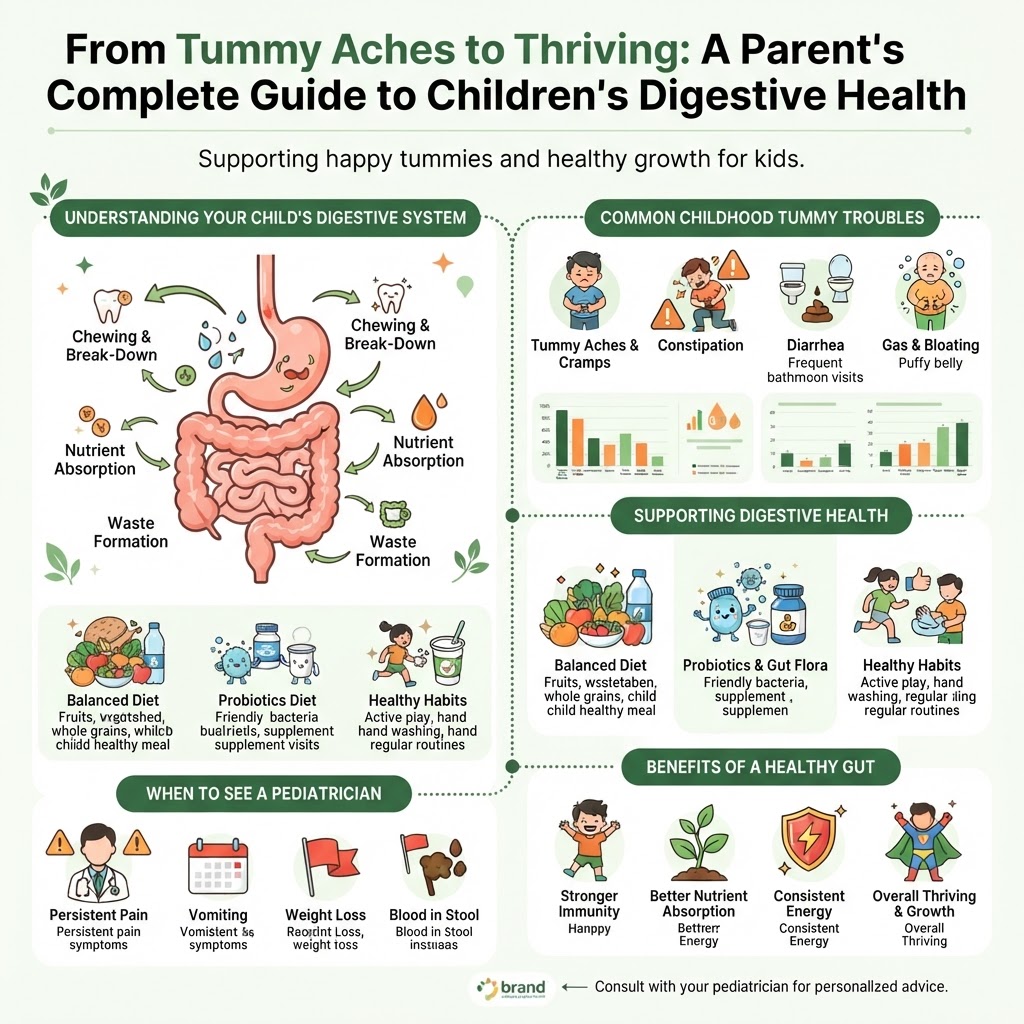
Infographic: Visual summary of key concepts discussed in this article.
Suggested infographic: "The Three Pillars of Children's Gut Health" — visual diagram showing Feed (prebiotic foods), Seed (probiotics/strains), and Protect (sleep, play, stress management) with icons and child-friendly design.
Section 4: Practical Action Steps for Parents — Starting This Week
A Step-by-Step Reset for Your Child's Gut Health
You don't need to overhaul everything overnight. Research consistently shows that small, sustained changes produce better long-term outcomes than dramatic short-term interventions. Here's a realistic, practical plan:
-
Audit the lunchbox — swap one ultra-processed snack for a whole food option this week. A handful of berries, some carrot sticks with hummus, or plain yoghurt with fruit are excellent starting points.
-
Add one fermented food per day — plain full-fat yoghurt at breakfast is the easiest entry point for most South African families.
-
Introduce a quality chewable probiotic — choose one with multiple clinically relevant strains, protective delivery technology, and no nasty additives (more on this below).
-
Establish a regular sleep routine — aim for 10–12 hours for young children, 9–11 for school-age kids. Consistent bedtimes make a measurable difference to gut health.
-
Get outside daily — even 30 minutes of outdoor play in a garden or park supports microbial diversity and reduces the stress hormones that damage gut integrity.
-
Track your child's gut health — our free Poop Patrol gut tracker makes it surprisingly easy (and even fun for kids) to monitor bowel patterns and identify trends over time.
-
Reduce unnecessary antibiotic exposure — have an honest conversation with your paediatrician about watchful waiting for viral infections where antibiotics won't help.
-
Stay consistent — the microbiome responds to patterns, not single events. Two to four weeks of consistent support is typically when families start noticing meaningful changes.
Understanding the Gut Health Science
If you want to go deeper into the research underpinning these recommendations, I'd encourage you to explore our dedicated gut health science hub, where we break down the clinical studies, explain the mechanisms, and keep you updated as this rapidly evolving field advances.
Section 5: BioKid Chewable Probiotics — Designed for Children's Guts Specifically
Why Most Children's Probiotics Fall Short
Here's something I want to be honest about: the children's probiotic market is crowded with products that look impressive on the label but deliver very little where it counts — inside the gut.
The fundamental challenge with oral probiotics is survivability. The journey from a tablet or gummy to the intestinal lining is brutal. Stomach acid, bile salts, and digestive enzymes destroy the vast majority of live bacteria before they ever reach the colon, where they're needed most. Some studies suggest that conventional probiotic products lose up to 90% of their viable bacteria before reaching their destination.
This is the problem that drove us to develop something better at Velobiotics.
Velo16 Technology — Probiotics That Actually Arrive
At the heart of BioKid Probiotics is our proprietary Velo16 technology — an advanced microencapsulation system that wraps each probiotic bacterium in a protective coating designed to survive the harsh gastrointestinal environment.
Think of microencapsulation as a tiny protective capsule around each live bacterium — shielding it from stomach acid and bile, and only releasing it when it reaches the intestinal environment where it can colonise and thrive. This technology represents a meaningful step forward in probiotic delivery science, ensuring that what's on the label is what actually reaches your child's gut.
"The difference between a probiotic that works and one that doesn't often has nothing to do with what's on the label — it has everything to do with how many of those bacteria survive the journey. Velo16 microencapsulation was designed specifically to solve this problem for children." — Dr. Chomba Chuma
12 Strains — Because Diversity Matters
BioKid is formulated with 12 strains of carefully selected probiotic bacteria, including well-researched species from the Lactobacillus and Bifidobacterium families. Why does this matter?
Just as a diverse diet supports a diverse microbiome, a multi-strain probiotic covers more microbial territory than a single-strain product. Different strains colonise different areas of the gut, compete with different pathogens, and support different aspects of digestive and immune function. Our 12 strains formulation was designed with the developing child's microbiome specifically in mind — not simply scaled down from an adult product.
Key benefits supported by the BioKid formulation include:
- Digestive comfort — reducing bloating, irregular bowel movements, and post-meal discomfort
- Immune support for kids — supporting the gut-associated immune tissue that protects against infection
- Microbiome recovery — particularly valuable after antibiotic courses
- Gut barrier integrity — helping maintain the protective lining of the intestinal wall
- Mood and behaviour support — via the gut-brain axis
A Format Children Actually Accept
BioKid comes in a chewable probiotic tablet format — a decision we made deliberately. Capsules are difficult for young children to swallow. Gummies often contain added sugars that can undermine gut health. Powders are messy and easy to underdose.
A tasty chewable probiotic hits the sweet spot: easy to administer, accurately dosed, and appealing enough that most children take them willingly. No battles at the breakfast table.
If you're ready to give your child's gut the support it deserves, you can find BioKid Chewable Probiotics — our full product information, dosing guidance, and parent reviews are all there to help you make a confident, informed decision.
Conclusion: From Surviving to Thriving
Tummy aches don't have to be your child's normal. Recurring illnesses, low energy, and digestive discomfort are not simply unavoidable features of childhood — they are often signals that the gut microbiome needs support.
The science is clear, the tools are available, and the changes required are far less overwhelming than most parents fear. A gut-friendly diet, consistent sleep, outdoor play, and a quality chewable probiotic formulated with proven microencapsulation technology and a diverse 12 strains profile can make a profound difference in a relatively short period of time.
As parents, we can't protect our children from every germ or stressor they'll encounter. But we can build the internal resilience that allows them to meet those challenges and bounce back stronger. That resilience begins in the gut.
I invite you to join the thousands of South African families already on this journey. Connect with other parents, share your experiences, and access more expert resources through our community hub — because raising healthy children is always better together.
📌 Related Reading
Explore these helpful resources from the BioKid hub:
- 🔬 Gut Health Science — Dive deeper into the clinical research behind the microbiome and children's health
- 💊 BioKid Probiotics — Learn more about our Velo16-powered, 12-strain chewable probiotic for children
- 💩 Poop Patrol Gut Tracker — Track your child's bowel health and spot patterns with our free tool
- 🥗 Lunchbox Builder — Build gut-friendly, child-approved lunchboxes in minutes
- 👨👩👧 Community Hub — Connect with other parents and access expert Q&As
Dr. Chomba Chuma is a medical doctor and the founder of Velobiotics, a South African health company dedicated to making evidence-based probiotic science accessible to every family. The information in this article is educational in nature and does not constitute personalised medical advice. Please consult your healthcare provider regarding your child's specific health needs.
Get gut-smart, one email at a time.
Science made simple, practical tips and member-only offers. No spam, unsubscribe anytime.
By subscribing you agree to receive emails from BioKid (Velobiotics). POPIA compliant. Unsubscribe in one click.