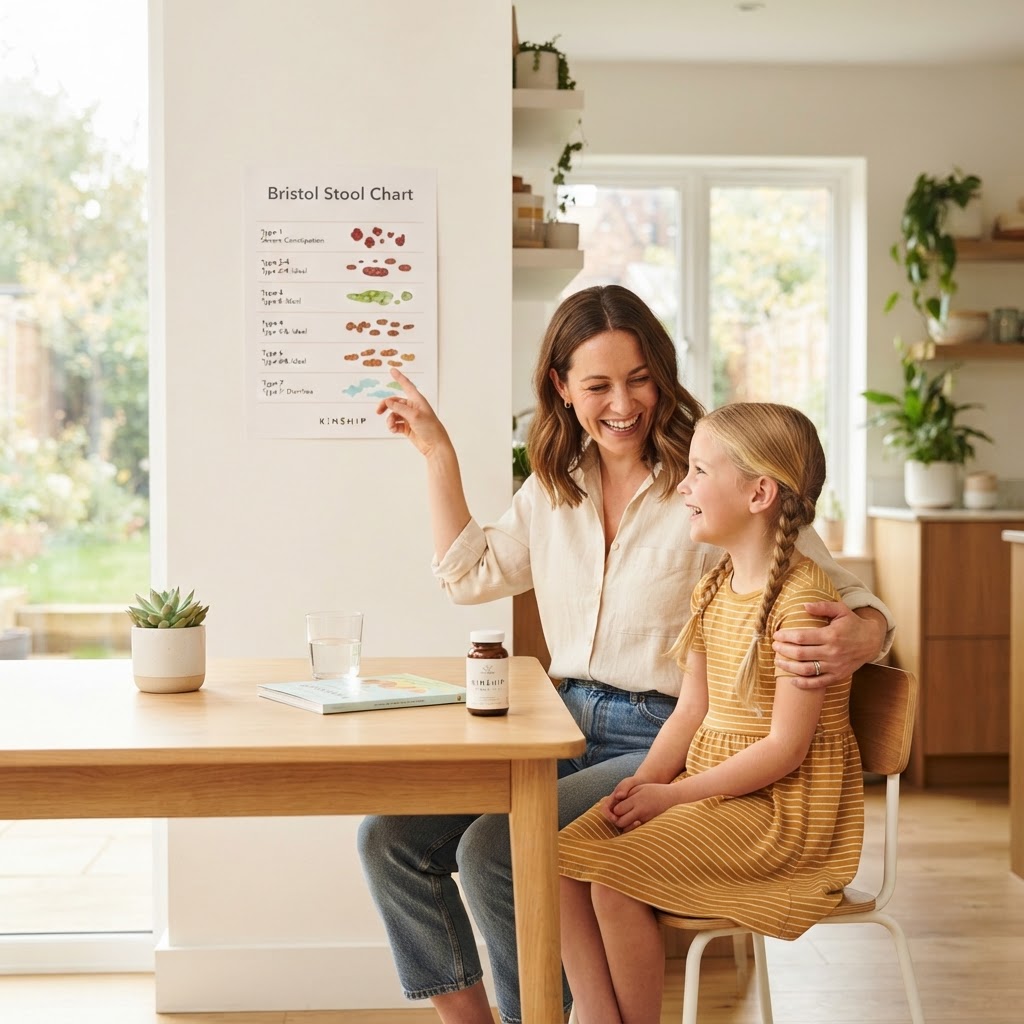
Poop Talk: What Your Child's Bristol Stool Chart Can Tell You About Their Health
Dr. Chomba Chuma
MD & Founder, Velobiotics
As a parent, your child's poo might not be your favourite topic — but it's one of the most revealing windows into their gut health. Learn how to read the Bristol Stool Chart, what each type means for your child's wellbeing, and how supporting their microbiome with the right children probiotics can make a world of difference.
Poop Talk: What Your Child's Bristol Stool Chart Can Tell You About Their Health
Let's be honest — as parents, we spend a surprising amount of time thinking about poo. From the early newborn days of counting nappies to the school-age years of decoding complaints about tummy aches, your child's bowel habits are quietly telling you a very important story. The question is: do you know how to read it?
As a medical doctor and founder of Velobiotics, I've spent years studying the relationship between the gut microbiome and children's overall health. And one of the most practical, accessible tools I recommend to every parent is the Bristol Stool Chart — a simple, visually intuitive guide that classifies stool into seven types. Understanding where your child's poo falls on this chart can give you early, actionable clues about their digestive health, hydration, diet, and even their immune system.
This isn't just poop talk for the sake of it. This is gut health science that every parent deserves to understand.
Section 1: The Science Behind the Stool — What's Actually Happening in Your Child's Gut
The human gut is one of the most complex ecosystems on the planet. In children, this ecosystem — known as the gut microbiome — is still developing and is profoundly influenced by diet, environment, antibiotic use, stress, and lifestyle. The microbiome consists of trillions of bacteria, fungi, and other microorganisms that play a central role in digestion, nutrient absorption, mood regulation, and immune support for kids.
"The gut is often called the second brain, and in children, it's arguably the most important organ we're not paying enough attention to." — Dr. Chomba Chuma, MD
When the gut microbiome is balanced and thriving — what scientists call eubiosis — digestion is efficient, stools are well-formed, and children tend to be energetic and resilient. When the microbiome is disrupted — a state called dysbiosis — we see the effects reflected almost immediately in stool consistency, frequency, and appearance.
The Harvard Health on gut microbiome highlights how the gut-brain connection influences mood, cognition, and behaviour — all of which are especially important during childhood development.
The Bristol Stool Chart, originally developed by Dr. Ken Heaton at the University of Bristol in 1997, is a medical tool used globally to classify stool form. It's been validated in both adult and paediatric populations, and it remains one of the most reliable non-invasive indicators of gut transit time — essentially, how long food is spending in your child's digestive system.
The Seven Types of the Bristol Stool Chart
- Type 1: Separate hard lumps, like nuts — severely constipated
- Type 2: Lumpy and sausage-shaped — mildly constipated
- Type 3: Sausage-shaped with cracks on the surface — normal to slightly firm
- Type 4: Smooth, soft sausage or snake — the ideal stool
- Type 5: Soft blobs with clear-cut edges — lacking fibre
- Type 6: Fluffy, mushy pieces with ragged edges — mild diarrhoea
- Type 7: Watery, no solid pieces — severe diarrhoea or infection
For children, Types 3 and 4 are the gold standard. Anything consistently outside this range warrants attention — and often, dietary and microbiome support.
Section 2: The Problem — Why So Many Children Are Producing the Wrong Type
If you've glanced into the school loo (or had your child describe their bathroom experience in alarming detail), you'll know that ideal Type 3–4 stools are not always the norm. In fact, constipation and irregular bowel habits are among the most common complaints I hear from parents in clinical practice.
Studies suggest that functional constipation affects up to 30% of children worldwide, and irregular stool patterns are even more prevalent when you include children who don't meet the clinical threshold but are still clearly not thriving digestively.
So what's going wrong?
The Modern Diet Problem
Children today are consuming more processed foods, refined sugars, and artificial additives than any previous generation. These foods are low in fibre and high in compounds that feed harmful gut bacteria, disrupting the microbial balance that supports healthy digestion. The WHO nutrition guidelines for children consistently emphasise the importance of fibre-rich whole foods — yet the average child's lunchbox tells a very different story.
Antibiotic Overuse
Antibiotics are life-saving, but they come at a cost to the gut microbiome. A single course of broad-spectrum antibiotics can reduce gut bacterial diversity by up to 25%, and in children — whose microbiomes are still maturing — this can have lasting effects on digestion, immunity, and even mental health.
Low Fluid Intake
Dehydration is one of the most common and easily overlooked causes of Type 1 and Type 2 stools in children. Many kids simply don't drink enough water throughout the school day, and the result is harder, more difficult-to-pass stools.
Stress and the Gut-Brain Axis
School anxiety, friendship conflicts, and academic pressure are not just emotional experiences — they physically alter gut motility and microbiome composition. Children who are anxious are far more likely to experience constipation or diarrhoea as a result of the gut-brain connection.
"When a child's stool is consistently outside the healthy range, I always look at the whole picture — diet, stress, sleep, and gut microbiome health. The poo is the signal; the cause is almost always upstream." — Dr. Chomba Chuma, MD
The Immune Connection
Here's something many parents don't realise: approximately 70% of the immune system resides in the gut. When your child's gut is out of balance, their immunity suffers too. Frequent colds, recurring ear infections, skin flare-ups, and even allergies can all be downstream effects of poor kids gut health — and the stool chart is often the first visible clue.
Section 3: The Solution — How to Bring Your Child's Gut Back Into Balance
The good news? The gut microbiome is remarkably responsive to positive change, especially in children. Here's what the science says about restoring balance and achieving those beautiful Type 3–4 stools.
1. Increase Dietary Fibre — the Right Way
Fibre feeds beneficial gut bacteria, adds bulk to stools, and helps regulate transit time. Aim for a variety of fibre sources:
- Fruits: apples, pears, berries, bananas (slightly unripe for prebiotic effect)
- Vegetables: broccoli, carrots, peas, sweet potato
- Wholegrains: oats, brown rice, wholegrain bread
- Legumes: lentils, chickpeas, baked beans
Use our Lunchbox Builder tool to create gut-friendly, fibre-rich meals your kids will actually eat.
2. Prioritise Hydration
Water helps soften stool and supports healthy transit. Encourage your child to drink water consistently throughout the day — not just when they're thirsty. A good target is roughly 1–1.5 litres per day for school-age children, adjusted for activity level and climate.
3. Establish a Toilet Routine
Children who are rushed in the mornings or who avoid school toilets often suppress the urge to go, leading to stool hardening and constipation. Encourage a relaxed, unhurried bathroom visit after breakfast — this aligns with the body's natural gastrocolic reflex.
4. Reduce Ultra-Processed Foods
Swapping even two or three ultra-processed items per week for whole food alternatives can significantly shift gut microbiome composition within weeks. Small, sustainable changes add up.
5. Support the Microbiome with Quality Probiotics
This is where children probiotics play a powerful role. Probiotics introduce beneficial bacterial strains directly into the gut, helping to crowd out harmful bacteria, restore microbial diversity, and support the production of short-chain fatty acids that nourish the gut lining.
The National Institutes of Health on probiotics confirms growing evidence for probiotics in managing constipation, diarrhoea, and antibiotic-associated gut disruption in children.
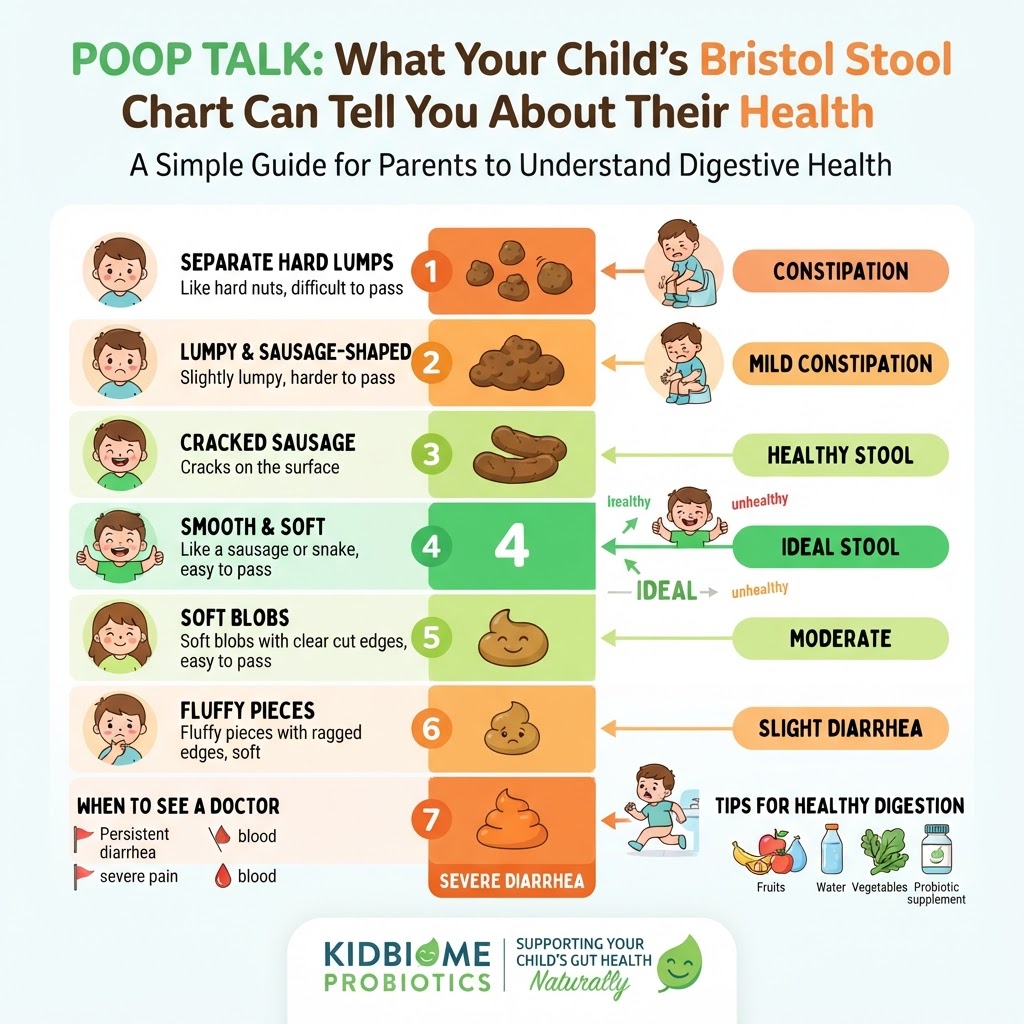
Infographic: Visual summary of key concepts discussed in this article.
Suggested infographic: Visual Bristol Stool Chart for children with gut health tips and probiotic action steps mapped to each stool type
Section 4: Practical Tips for Parents — Your Poop Patrol Action Plan
Knowledge is only useful when it's actionable. Here's how to turn Bristol Stool Chart awareness into a practical gut health routine for your family.
Step-by-Step: The Weekly Poop Check
- Normalise the conversation. Make poo talk a comfortable, shame-free topic at home. Children who feel embarrassed are less likely to tell you when something is wrong.
- Print or download the Bristol Stool Chart and stick it inside the bathroom cabinet. For younger children, use a child-friendly version with cartoon illustrations.
- Track for two weeks. Note which type your child is producing most frequently, as well as any complaints of straining, pain, or urgency.
- Look for patterns. Is the constipation worse on school days? After certain foods? During exam periods? This context is invaluable.
- Make dietary adjustments based on what you observe — more fibre and water for Types 1–2; reduce fruit juice and increase bland whole foods for Types 6–7.
- Introduce a quality probiotic to provide ongoing microbiome support.
- Use our Poop Patrol gut tracker to log your child's daily results and get personalised insights.
When to See a Doctor
While most stool irregularity in children is functional and responds well to dietary and lifestyle changes, please consult your GP or paediatrician if you notice:
- Blood in the stool
- Persistent diarrhoea lasting more than 48 hours
- Severe abdominal pain or distension
- Unexplained weight loss
- Stool that is consistently black or pale/white
- Constipation that doesn't respond to dietary changes within two weeks
Section 5: How BioKid Chewable Probiotics Support Healthy Stool and Gut Balance
Not all probiotics are created equal — and when it comes to children, quality, survivability, and palatability matter enormously.
As a clinician and researcher, I was deeply frustrated by the probiotics available for children. Many contained only one or two bacterial strains, poor-quality carriers, and no technology to ensure the bacteria actually survived stomach acid to reach the gut where they're needed. That frustration is what led me to develop Velobiotics and the BioKid Chewable Probiotics.
What Makes BioKid Different
BioKid Chewable Probiotics are built on our proprietary Velo16 technology — a cutting-edge microencapsulation process that wraps each probiotic bacterium in a protective coating, shielding it from stomach acid, heat, and moisture. This ensures that the live bacteria survive the journey through the digestive tract and arrive in the gut alive and active, where they can actually do their job.
"Microencapsulation is a game-changer for probiotic efficacy. Without it, a large proportion of bacteria in standard probiotics are destroyed before they ever reach the gut. With Velo16 technology, we're delivering viable, active strains exactly where the body needs them." — Dr. Chomba Chuma, MD
Here's what every BioKid tablet delivers:
- 12 strains of carefully selected beneficial bacteria, chosen specifically for their relevance to children's gut health
- Strains that support both the small and large intestine
- Prebiotic fibre to feed and sustain the probiotic strains
- A delicious chewable format — no capsules, no powder, no fuss
- Sugar-free and free from artificial colours and flavours
- Suitable from age 3 upwards
The 12 strains in BioKid work synergistically to restore microbial diversity, support regular bowel movements (hello, Type 3–4 stools!), and provide meaningful immune support for kids by strengthening the gut-associated lymphoid tissue (GALT) — the immune tissue that lines the gut wall.
As a chewable probiotic, BioKid removes one of the biggest barriers to children's supplement compliance: the format. Parents consistently tell us that their children ask for their BioKid tablet each morning — which means the routine sticks, and the benefits are sustained.
For children recovering from antibiotics, experiencing frequent constipation or loose stools, or simply not eating a varied enough diet (which is most children, let's be honest), BioKid provides a reliable, scientifically-backed daily foundation for gut health.
You can learn more about the gut health science behind our formulation, or purchase BioKid Chewable Probiotics directly from our website.
Conclusion: Your Child's Poo Is Trying to Tell You Something — Are You Listening?
The Bristol Stool Chart is not just a quirky medical poster. It's a practical, evidence-based communication tool that bridges the gap between what's happening inside your child's gut and what you can see and respond to as a parent.
Healthy stools — consistently in the Type 3–4 range — are a sign that your child's digestive system is functioning well, their microbiome is in reasonable balance, and their body is absorbing the nutrients it needs to grow, learn, and thrive. Stools that consistently fall outside this range are a gentle (or sometimes not so gentle) signal that something needs attention.
The foundations are always the same: a fibre-rich, whole-food diet; adequate hydration; reduced stress where possible; consistent routines; and targeted microbiome support through quality children probiotics like BioKid.
You don't need to become a gut health expert overnight. You just need to start paying attention — and now you have the tools to do exactly that.
Join our community hub to connect with other parents navigating kids gut health, share your experiences, and access expert advice from our Velobiotics team.
📌 Related Reading
- Explore the science behind BioKid's formulation
- Try our Poop Patrol gut tracker for daily stool monitoring
- Build a gut-friendly lunchbox with our Lunchbox Builder
- Shop BioKid Chewable Probiotics
- Join our community hub for parent support and gut health tips
Article written by Dr. Chomba Chuma, MD — Founder of Velobiotics and BioKid. This article is intended for informational purposes and does not constitute medical advice. Always consult your healthcare provider for personalised guidance.
Get gut-smart, one email at a time.
Science made simple, practical tips and member-only offers. No spam, unsubscribe anytime.
By subscribing you agree to receive emails from BioKid (Velobiotics). POPIA compliant. Unsubscribe in one click.